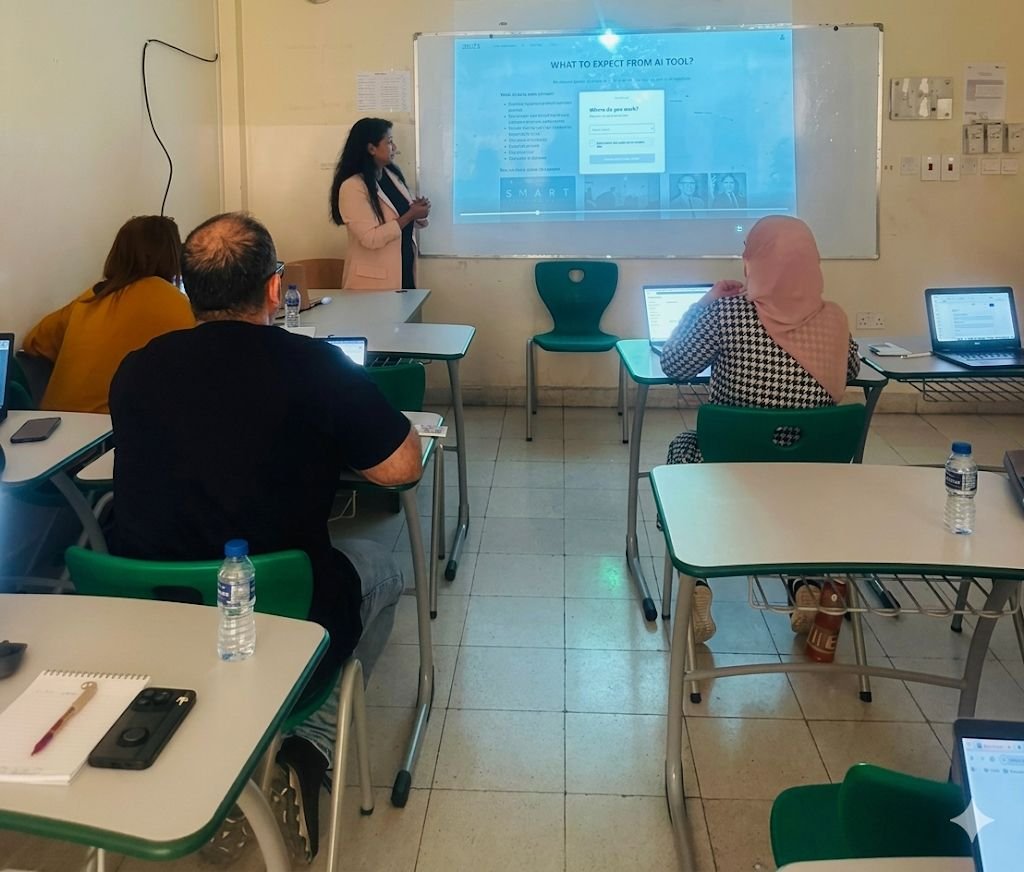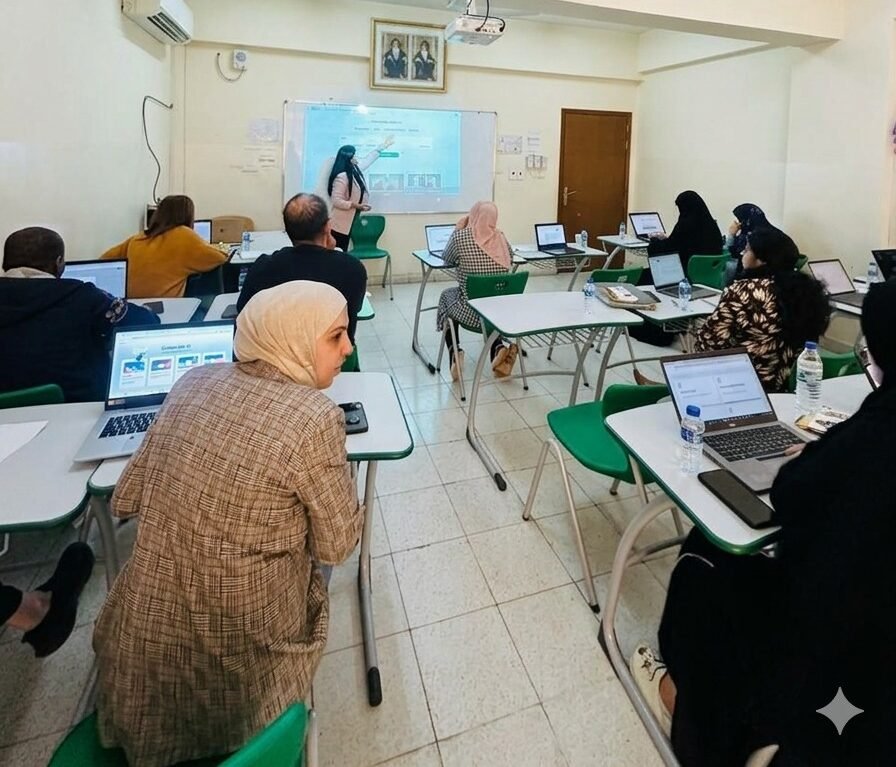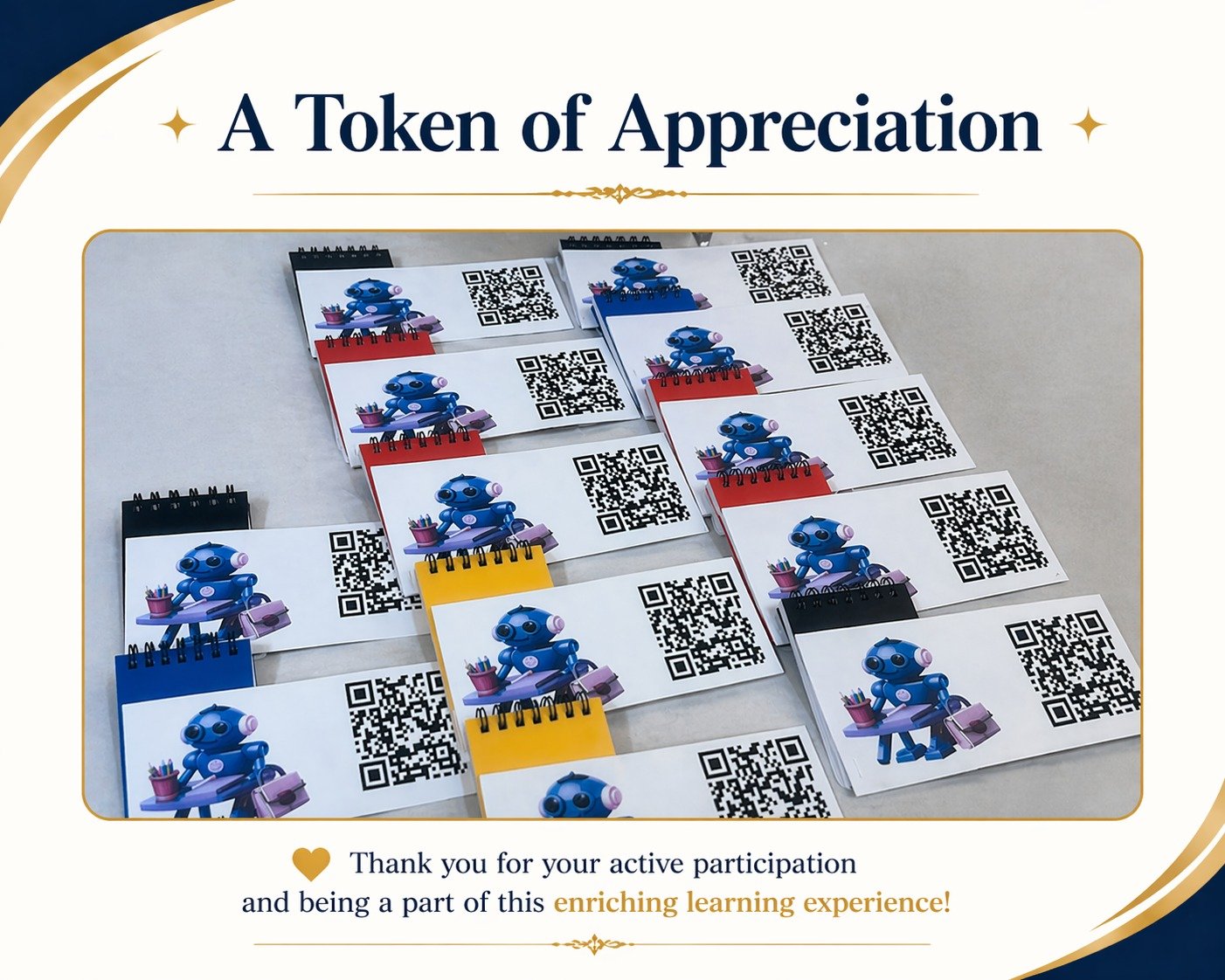

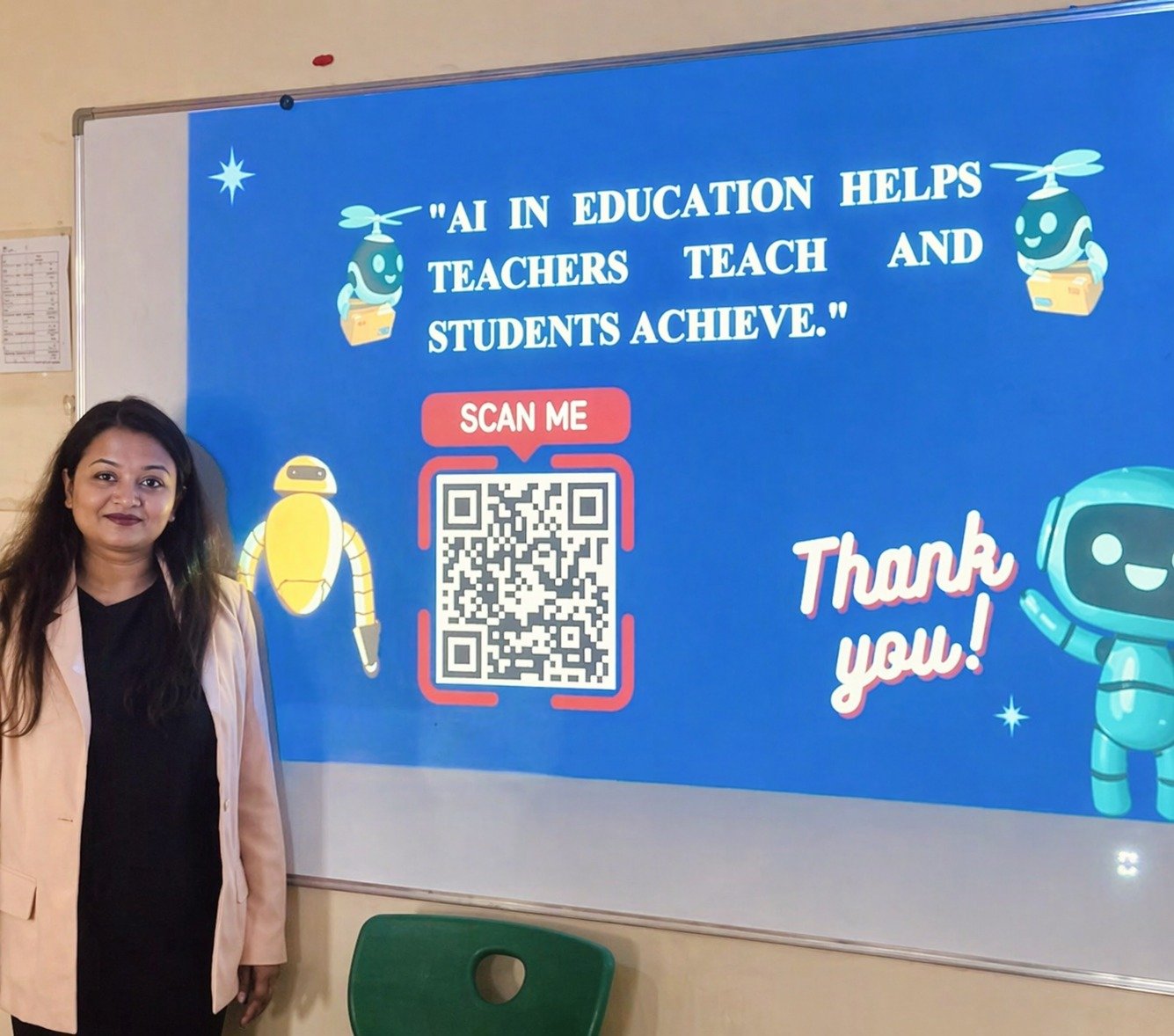
The school conducted a comprehensive professional development workshop titled “Different Applications of Artificial Intelligence Tools in Education”, facilitated by Mrs. Surekha Xavier, who holds a double Master’s degree in English Literature and Business Management. The workshop was designed to equip educators with a deeper understanding of emerging Artificial Intelligence technologies and to demonstrate their strategic application in enhancing pedagogical practices, student engagement, and instructional efficiency.
Workshop Objectives
The session was structured around the following objectives:
AI in Education
The workshop underscored the paradigm shift from traditional, teacher-centered instruction to learner-centered, technology-enabled educational environments. Artificial Intelligence facilitates personalized learning pathways, supports differentiated instruction, and enhances formative and summative assessment practices. It serves as a transformative force in modern education, enabling educators to address diverse learner profiles while optimizing teaching outcomes.
Types of AI Tools Introduced
A wide spectrum of AI-powered tools was introduced to demonstrate their practical application in the classroom:
These tools exemplify the integration of technology to enhance both instructional delivery and learner engagement.
Benefits of AI Tools in the Classroom
The workshop highlighted several significant advantages of incorporating AI into educational practices:
Role of Teachers
The workshop emphasized the indispensable role of educators in the ethical and effective integration of AI technologies. While AI serves as a powerful supportive tool, it does not supplant the teacher’s role. Instead, educators remain central to guiding learning, ensuring ethical usage, and cultivating critical thinking. Professional discretion and pedagogical expertise are essential in leveraging AI to achieve meaningful educational outcomes.
Key Takeaways
Conclusion
The workshop provided profound insights into the transformative potential of Artificial Intelligence within the educational landscape. It reinforced the necessity of embracing technological innovation to create adaptive, inclusive, and future-ready learning environments. By integrating AI thoughtfully and responsibly, educators can significantly elevate both teaching methodologies and student learning experiences, thereby preparing learners for the demands of an increasingly digital world.
_______________________________
Presented by: Mrs. Surekha Xavier
Edited by: Educational Media Department – Al Hikma Private School