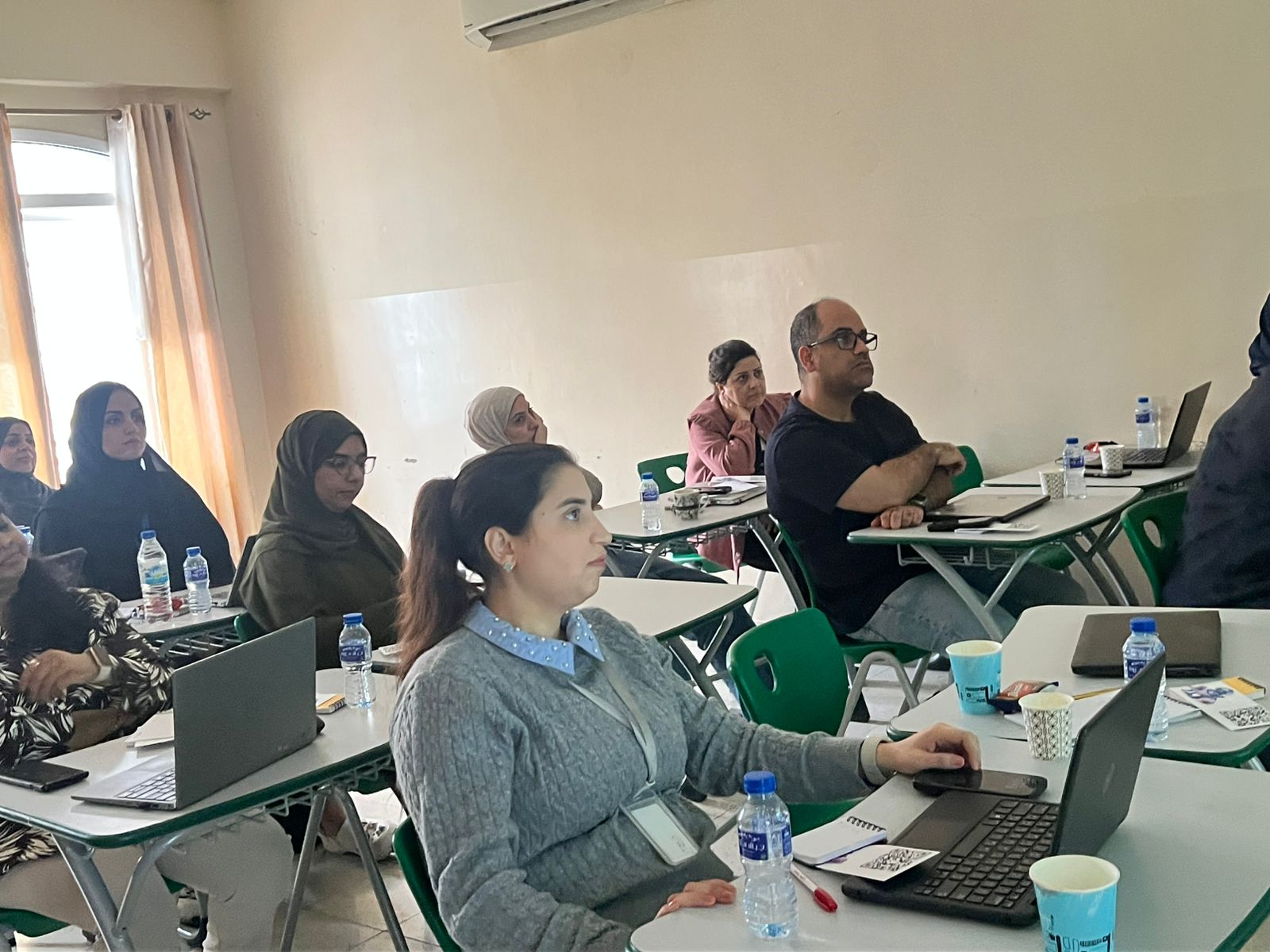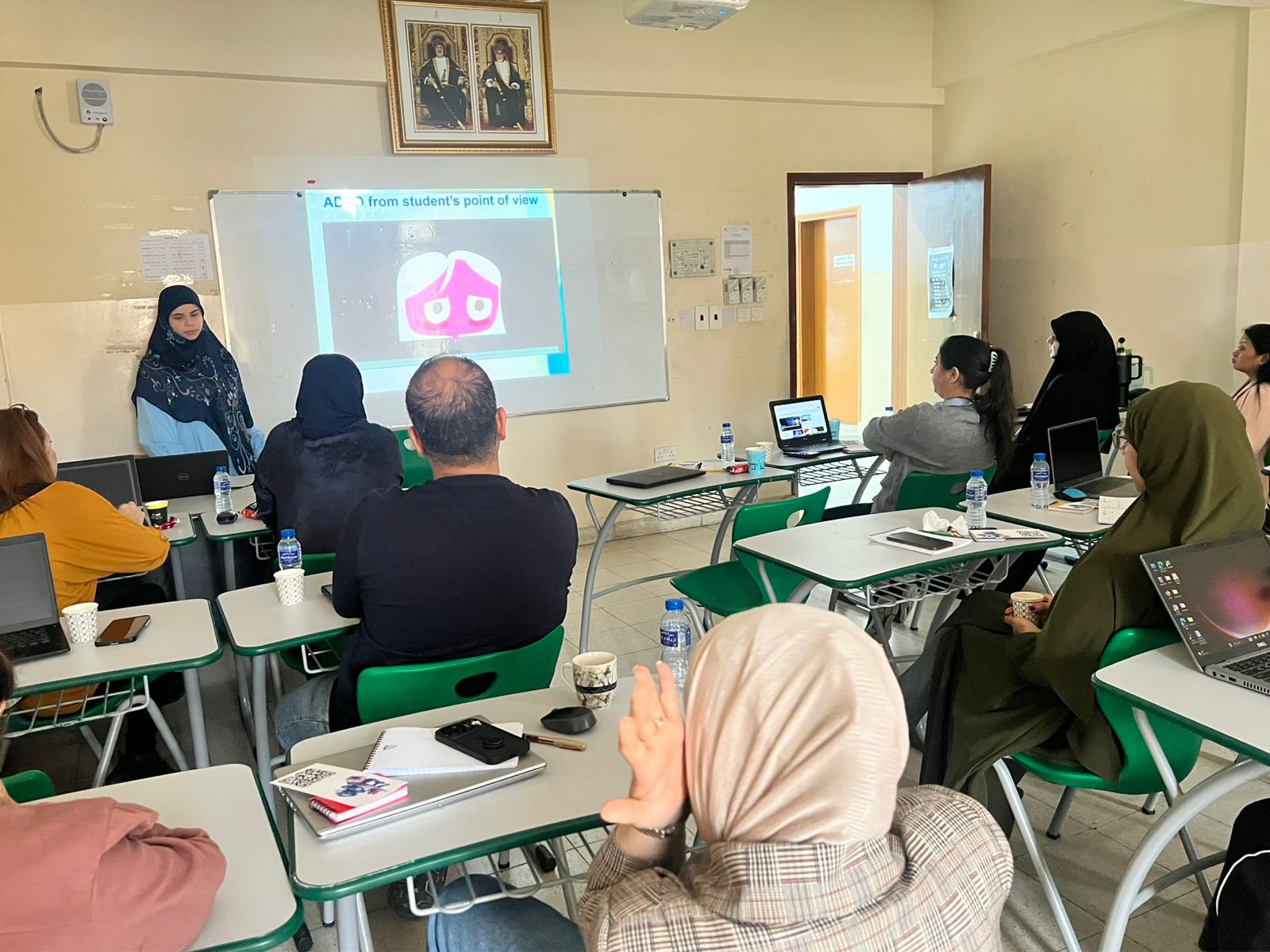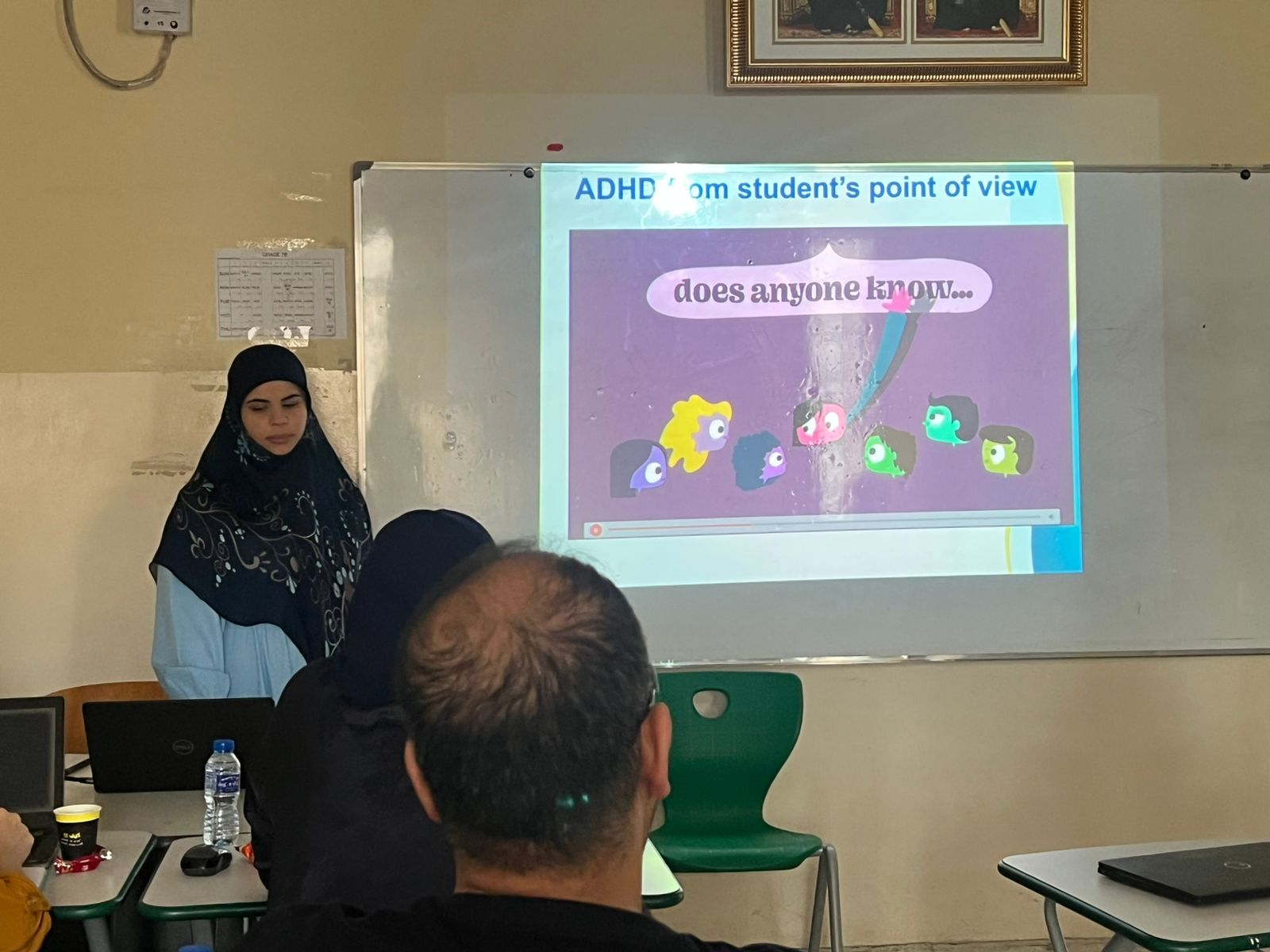

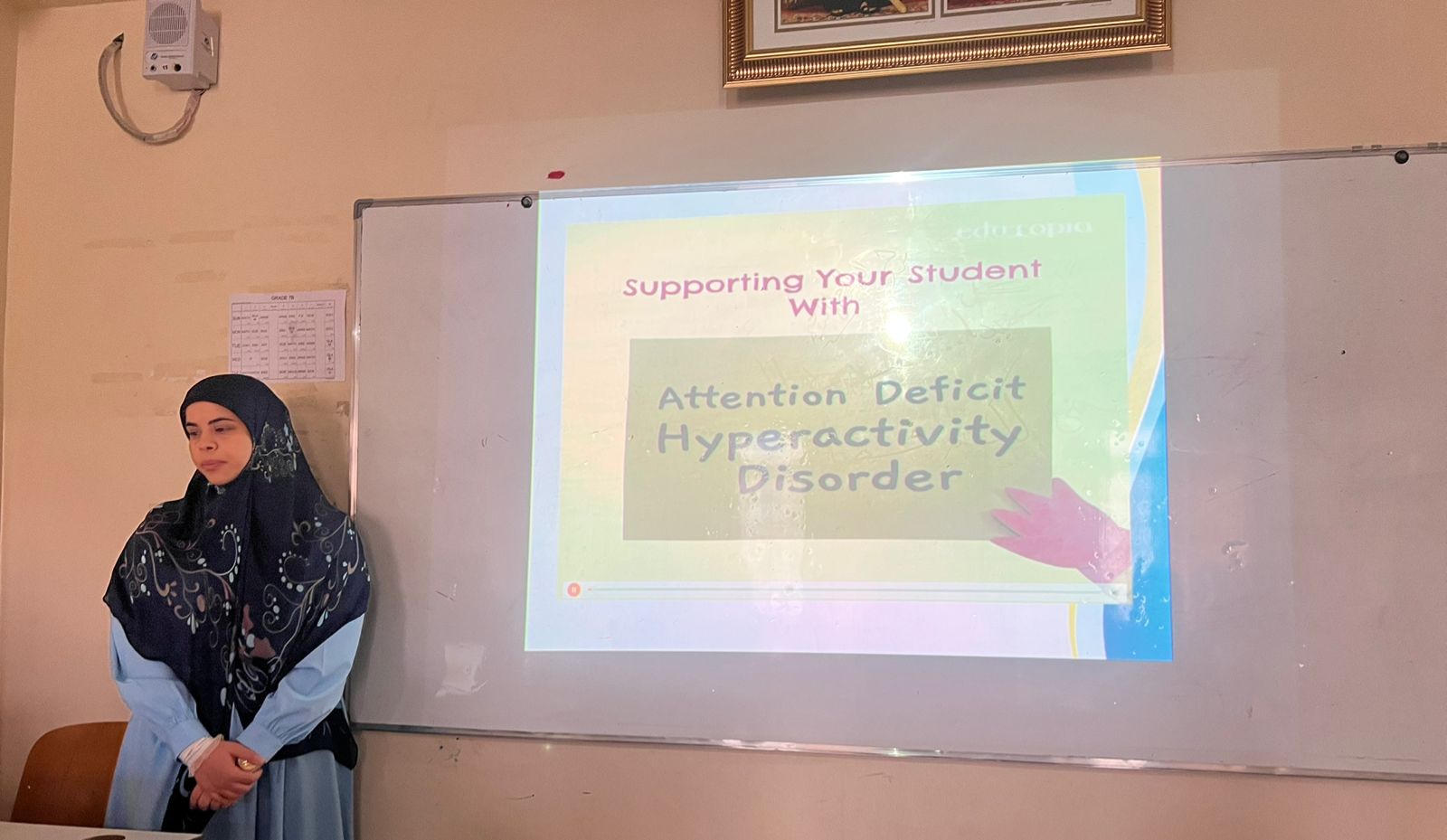
The school recently hosted a professional psychoeducational workshop titled “Every Mind Matters: Understanding Neurodiversity in the Classroom – Empowering Learners”, presented by Dr. Doa’a Saayed; Doctorate in physical chemistry and nanotechnology.The workshop aimed to raise awareness about neurodiversity in educational settings and to equip teachers with practical, evidence-based strategies to better support students with diverse learning needs.
The session focused on:
The workshop emphasized that neurodiversity reflects natural variations in how students think, learn, and communicate. Students process information differently: some learn best through listening, while others benefit from visual aids, repetition, movement, or additional time. These differences are not indicators of lower ability, but rather part of normal brain diversity.
ADHD was presented as a common condition across all school levels, characterized by inattention, hyperactivity, and impulsivity. Classroom signs may include distractibility, difficulty completing tasks, impulsive behavior, and poor organization. The session highlighted the importance of viewing ADHD from the student’s perspective to foster empathy and understanding.
Dr. Doaa shared her 13 years of teaching experience and provided practical guidance on supporting students with ADHD.
Effective support strategies discussed included:
These approaches help improve focus, organization, and student engagement.
The workshop also addressed anxiety and its impact on learning, memory, and attention. Common classroom signs include avoidance, perfectionism, physical complaints, and fear of participation. Teachers were encouraged to recognize these signs early and respond with understanding and appropriate support.
Teachers play a crucial role in observation, documentation, and referral, while diagnosis remains the responsibility of specialists. The importance of collaboration between teachers, parents, school counselors, psychologists, and speech therapists was strongly emphasized.
Early support improves outcomes: Early identification and intervention lead to better academic, behavioral, and emotional development.
Behavior communicates needs: Student behavior is a form of communication and should be understood rather than judged.
Inclusion benefits everyone: Inclusive classrooms promote empathy, respect, and social growth for all students.
The workshop reinforced the school’s commitment to inclusive education and student well-being. By understanding neurodiversity and responding with informed, compassionate practices, educators can create supportive learning environments where every student has the opportunity to succeed.
Presented by: Dr. Doa’a Saayed
Edited by: Educational Media Department – Al Hikma Private School